Activage
Move Together
Think Green
Connect Generations
|
About Activage
ACTivAGE is an Erasmus+ sport project that envisions communities where children, youth, adults, and older people come together in outdoor spaces, learning from one another through movement, play, and care for the environment. It aims to contribute to a more inclusive, sustainable, and socially cohesive Europe, using the power of sport and non-formal education to strengthen the European values of cooperation, respect, and equity.

Traditional Games
Traditional Games Camp (Greece) – for children aged 8–12, focusing on movement through cultural games and nature play

Orienteering
Orienteering Camp (France) – for youth aged 13–24, teaching navigation, resilience, and environmental awareness

Outdoor Yoga
Outdoor Yoga Camp (Cyprus) – for adults and seniors (24+), promoting health, mindfulness, and community bonding
Presentation
Activage project presentation that covers all the main aspects of the project
Background
Project background based on needs analysis
Objectives
What we are trying to achieve
Activities
What we will do during the project duration
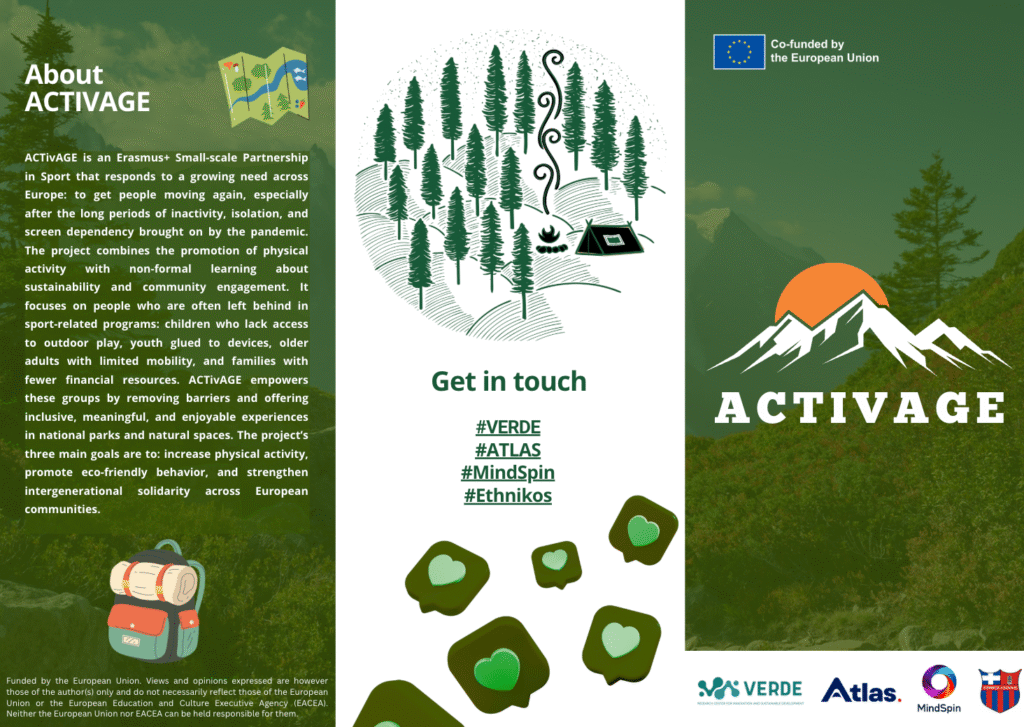
Trifold Brochure
Brochure ready to be printed and disseminated!
About Activage
Learn about the project and why it matters
Methodology & Approach
ACTivAGE is based on a participatory, experiential learning approach that uses non-formal education, physical activity
Outdoor Camps That Inspire, Educate, and Connect
The core of ACTivAGE lies in its series of outdoor camps.
Other material
We create material to enhance the visibility for our project
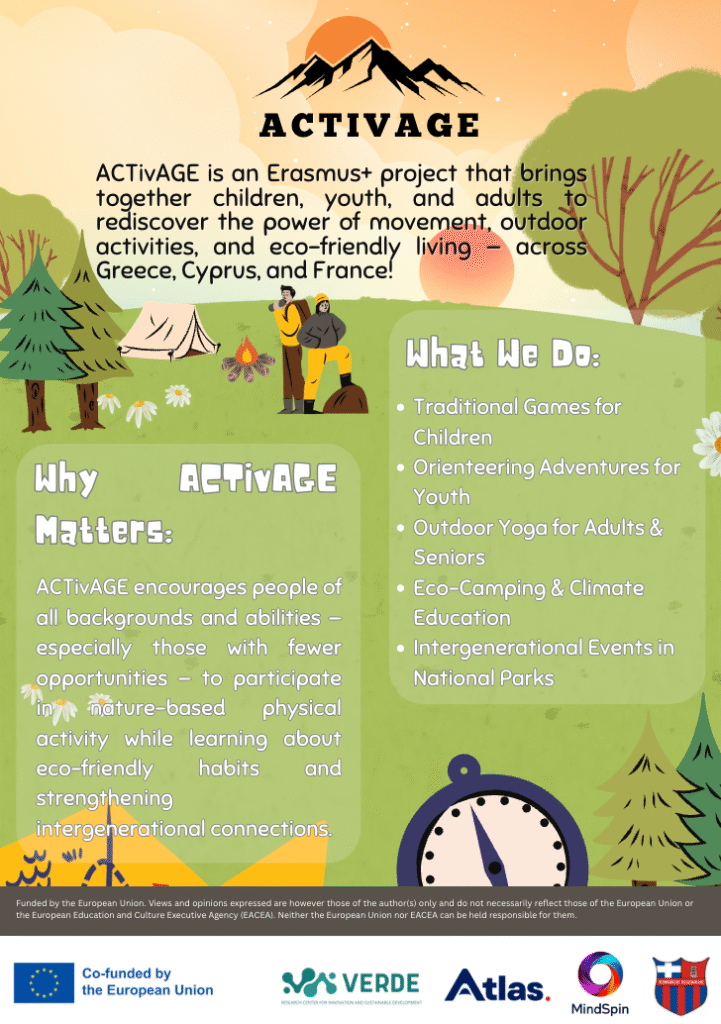
Activage Poster
Poster with the main aspects of the project
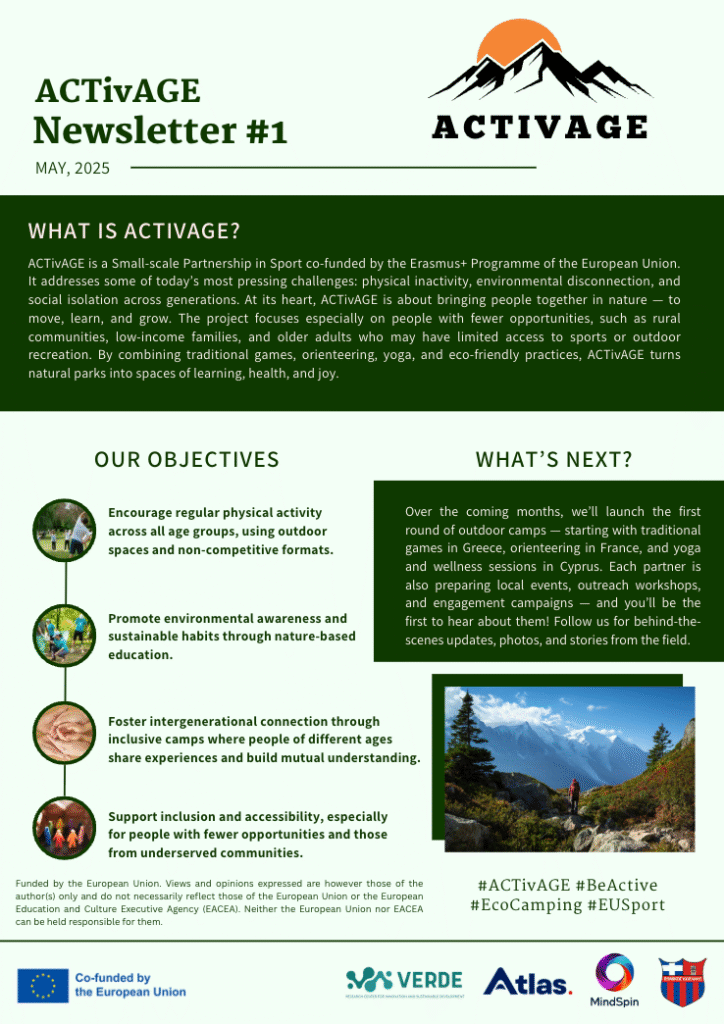
Activage Newsletter
Newsletter with the latest news
Production and Delivery
Ensure files are optimized for print or digital use
Get in Touch with Us!
Questions? Inquiries? Don’t hesitate to contact us!
VERDE Office Address
Platia Avlioti 41, Kozani, Greece
VERDE Email Address
info [at] verde-center.com
Funded by the European Union. Views and opinions expressed are however those of the author(s) only and do not necessarily reflect those of the European Union or the European Education and Culture Executive Agency (EACEA). Neither the European Union nor EACEA can be held responsible for them.